The Scale-Up Odyssey: What Homer Can Teach Us About Growing a Business
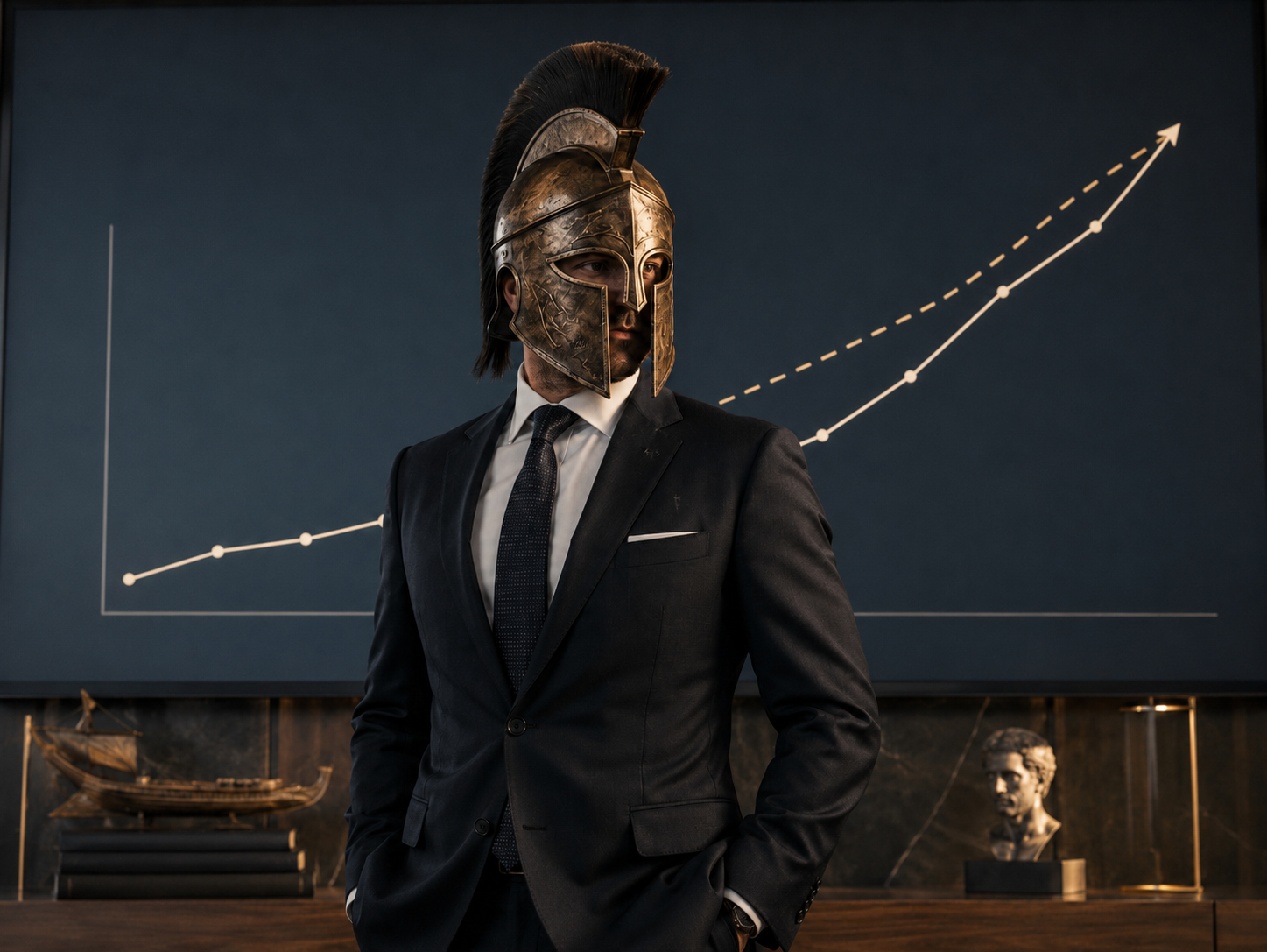
It’s not like me to jump on the hottest new thing, but, as an unabashed Hellenic history fan, I was unreasonably excited to see Christopher Nolan’s take on The Odyssey.
Seeing how he took the story in his own creative direction, I began to wonder, somewhat tongue in cheek, whether some of its monumental moments could be used as analogies for scaling a business.
So, before I stretch the comparison too thin by shoehorning in my own experiences and piggybacking on something currently popular, let’s reimagine Odysseus as the CEO of a promising growth business.
What might Homer’s wisdom teach us about modern leadership and scale?
Some mild spoilers follow, but given that The Odyssey is more than 2,000 years old, I think we are safely beyond spoiler territory.
The Cyclops, Polyphemus – the danger of hubris
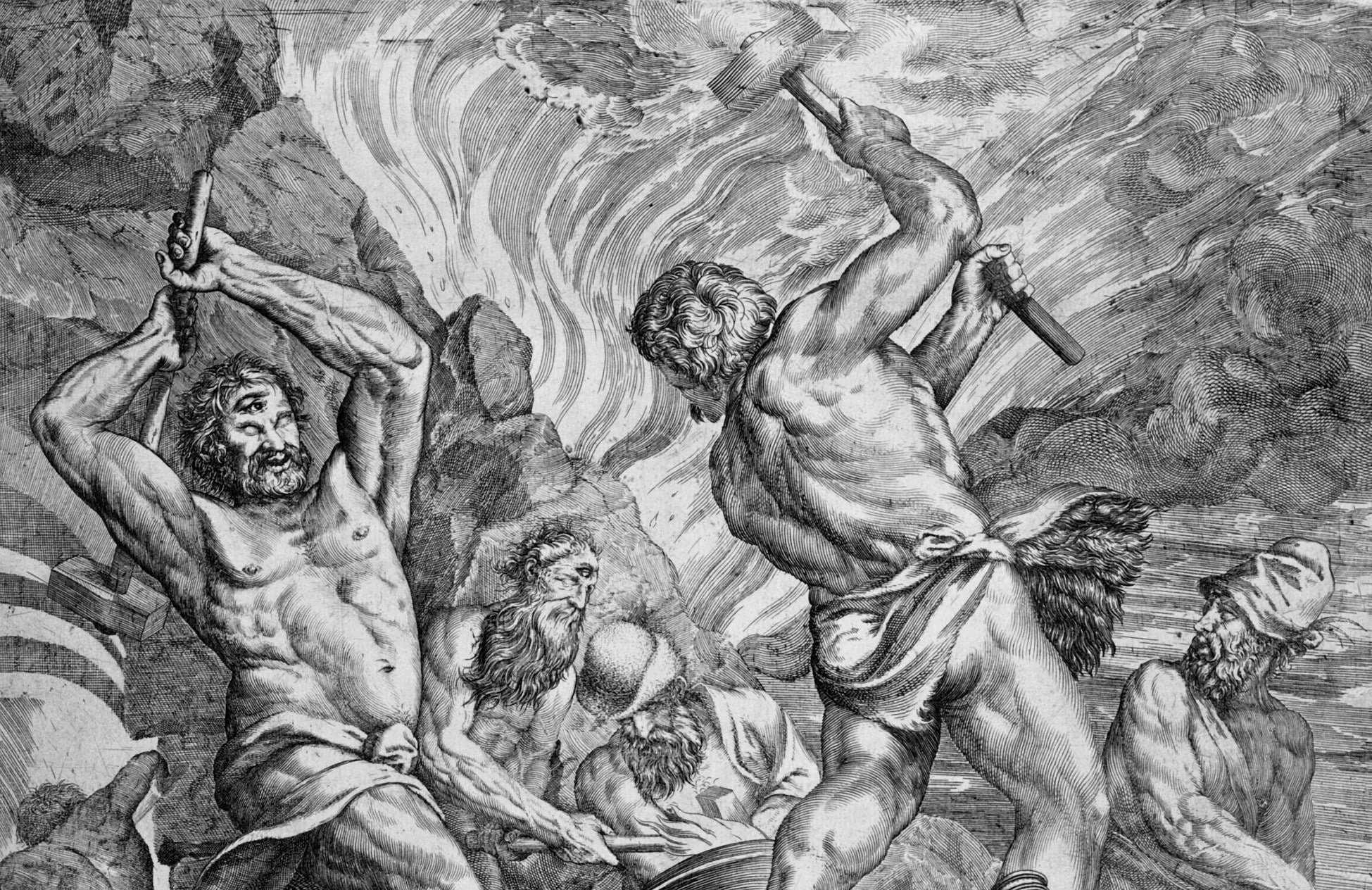
In the original story, Odysseus, a brilliant tactician, tells the Cyclops Polyphemus that his name is “Nobody”.
When Odysseus makes his move to escape and attacks him, Polyphemus cries out that “Nobody” is attacking him. The other Cyclopes therefore assume that nothing is wrong and do not come to help.
Brilliant, right?
Unfortunately, in a spectacular act of hubris, Odysseus cannot resist telling Polyphemus who he really is. He cannot allow his moment of triumph to go unrecognised.
Polyphemus then calls on Poseidon to punish him, setting the course for much of what follows.
Take: Most founders and early-stage leaders I meet are incredibly driven. Their success often comes from an unwavering belief that they can achieve something others think is impossible, followed by the slightly inconvenient experience of being proved right.
That belief matters. Albert Bandura’s work on self-efficacy shows how our belief in our ability to succeed in a particular situation can influence the goals we pursue, the effort we make and how persistently we respond to setbacks.
For founders, that conviction can be a genuine competitive advantage. The challenge is preventing justified self-belief from becoming unchecked hubris.
Be kind. Build a community around you. Do not feel the need to win every argument or demonstrate that you are the smartest person in every room.
Unlike Odysseus, choose your moments to be brilliant, but be humble enough not to need everyone to know it.
The Sirens – the call of distraction
Not every exciting idea deserves to become a company-wide priority. You don’t need to risk being dragged onto the rocks.
It is something we see far too often.
New product ideas. New markets. Investor attention. Bespoke customer requests. Shiny technology. All drawing energy away from the core purpose of running and growing the business.
In Good to Great, Jim Collins describes the Hedgehog Concept: the idea that successful organisations understand what they can be best at and maintain a disciplined focus on doing it exceptionally well.
Good businesses tend to know who they are, what their core offering is and why customers choose them.
Promising businesses that are continually pulled towards new markets and new ideas before they have properly executed their existing model risk being dragged onto the rocks by the call of the Sirens.
Take: You probably do not need to tie yourself to a mast or put wax in your ears, but you should remain alert to opportunities that pull you away from your core purpose.
Sometimes a distraction is also a genuine opportunity. The question is whether you can invest the necessary time, money and energy without diverting the entire organisation from what it already needs to deliver.
Not every exciting idea deserves to become a company-wide priority. You don’t need to risk being dragged onto the rocks.
Scylla and Charybdis – there is no perfect choice
Odysseus must navigate between Scylla, who will take some of his crew, and Charybdis, who could destroy the entire ship.
He chooses the route involving a known but limited loss.
Take: Stalling on difficult decisions can put the whole business at risk.
Leadership decisions rarely come with perfect outcomes. Restructuring the organisation, changing the operating model, closing a product line, parting company with an early employee or prioritising one market over another will often involve genuine loss.
What Odysseus does well is navigate a devastatingly difficult choice in which both potential outcomes involve hardship.
The lesson is that mature leadership is not about avoiding all damage. It is about making an explicit trade-off, communicating it honestly and preventing a difficult choice from becoming a catastrophic one.
Not choosing is still a choice, and frequently the wrong one.
Calypso – the trap of comfort
After an intense period of growth, things finally begin to click.
Sales appear stable. Operations function without major incident. New clients can be onboarded effectively. The team is no longer solving a new crisis every week.
Things seem good.
Odysseus breathes a sigh of relief. He knows he is not back in Ithaca, but there is no raging sea and there are no monsters. He takes his foot off the pedal.
Objectives become vaguer. Standards loosen. Difficult conversations are postponed. The company’s edge, previously built on speed and agility, begins to blunt as competitors catch up.
Odysseus forgets the ultimate destination and languishes in a false sense of arrival.
Take: Growth is hard. The journey takes a toll on leaders and teams, and it is easy to mistake a period of stability for having reached the destination.
Success should be recognised and celebrated. Constant urgency is neither healthy nor sustainable.
But there is a difference between pausing to recover and settling permanently on the shores of an island you never intended to reach.
Sustainable growth means continuing to move forward with focus and discipline, even when the immediate pressure has eased.
The Return to Ithaca – the ultimate test
“A leader lifts the weary and shares the burden without loud boasts.”
Odysseus
Eventually, Odysseus returns to Ithaca.
In business terms, this is the moment the founder reaches the destination they have talked about throughout the journey: a sale, a significant investment round or perhaps the opportunity to step away from the day-to-day running of the company.
But returning to Ithaca is not quite the triumphant homecoming he imagined.
Odysseus arrives without his ships and without his crew. He has survived, but much of what he began the journey with has been lost along the way.
His home has also been occupied by suitors who have spent years consuming its resources while contributing very little in return.
There is an uncomfortable parallel here.
A founder may reach an exit having achieved impressive growth, but the final stage of the journey has a habit of exposing what lies beneath the story.
Customer concentration. Fragile systems. Exhausted leaders. Inconsistent performance. Weak governance. Critical knowledge held by one or two people. A business that still depends on the founder to make every important decision.
These things suddenly become much harder to disguise.
The investment deck may describe a remarkable growth journey. Due diligence will ask whether the business can repeat it.
Odysseus initially returns in disguise, watching carefully before revealing who he is. A sale or investment process can feel much the same. The heroic founder narrative is temporarily stripped away and the business is examined for what it really is.
Can it operate without the founder making every important decision?
Is the leadership team capable of navigating without them?
Are its revenues predictable?
Are its processes repeatable?
Has the organisation built something sustainable, or has it simply survived through the energy and ingenuity of one exceptional person?
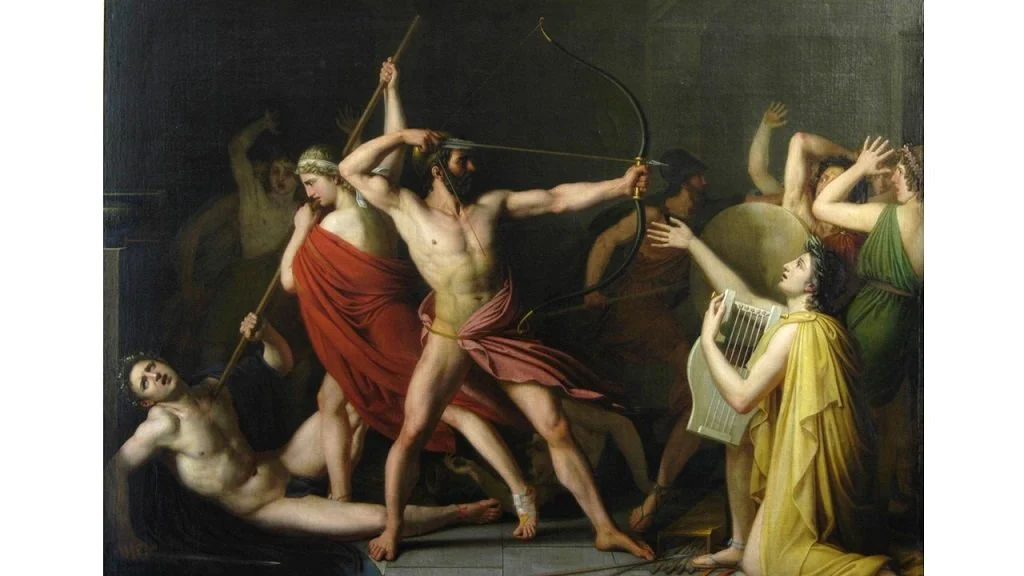
In The Odyssey, the final test involves Odysseus’s bow. Many attempt to string it, but only Odysseus can do so.
That might make for a satisfying heroic ending, but it would be a warning sign in a modern business.
If only the founder can operate the machinery, maintain the key relationships, explain the strategy or close the biggest deals, the business has not truly scaled.
It has simply extended the founder’s individual reach.
Take: An exit or investment round is not merely a reward for completing the journey. It is an examination of what you built along the way.
A buyer is not purchasing the hours you worked, the crises you personally solved or the monsters you defeated. An investor is not simply backing the force of your personality.
They are investing in the organisation’s ability to succeed when you are no longer standing at the helm.
Odysseus eventually reclaims Ithaca, and history remembers him as a brilliant and resilient leader. That feels fair. He survived challenges that would have defeated almost anyone. He was the strategist whose ingenuity helped the Greeks topple Ilion.
But in Nolan’s interpretation, he is also a man haunted by what has come before. His return does not feel like the victory he imagined when the journey began.
He arrives years late, having lost every ship and every member of his crew.
Perhaps that is the ultimate lesson for a scaling CEO: reaching the destination is not enough.
The best business odyssey is not one in which the heroic founder personally defeats every monster and arrives alone.
It is one in which the crew reaches Ithaca too, the organisation is stronger for the journey and nobody needs to wait for the hero to return before the business can function.
Because an organisation that cannot succeed without its founder has not completed its odyssey.
It is still waiting to leave the shore.